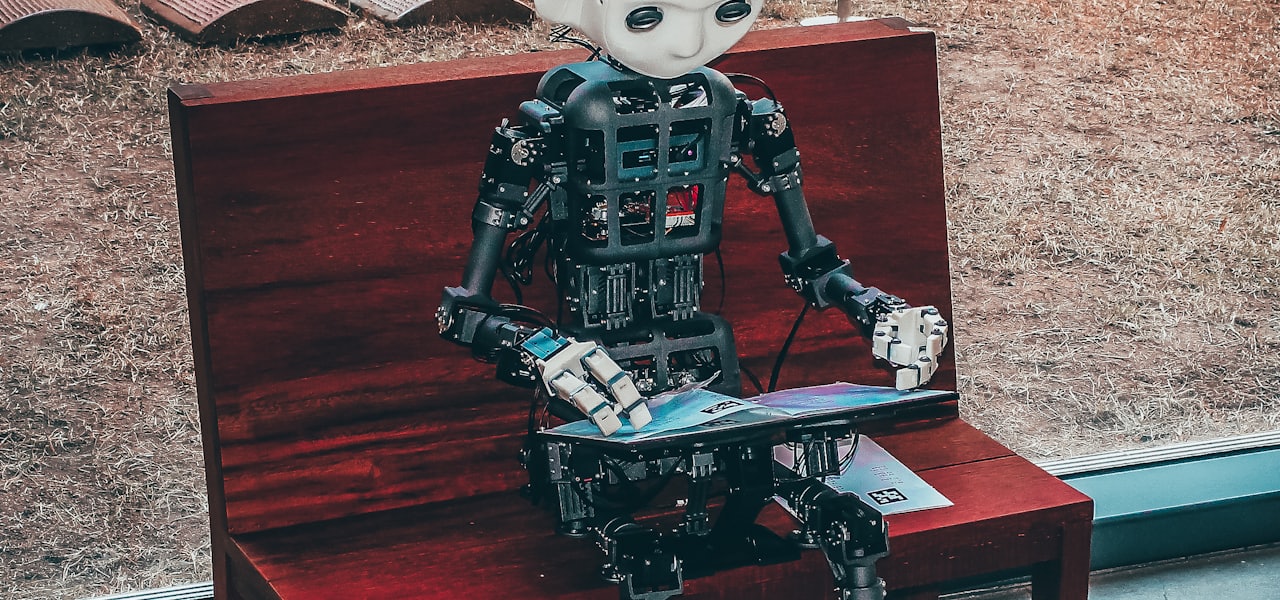
Niki was an artificial intelligence company headquartered in Bangalore, Karnataka. It was founded in May 2015 by IIT Kharagpur graduates Sachin Jaiswal, Keshav Prawasi, Shishir Modi, and Nitin Babel. The Niki android app was launched for a limited beta in June 2015, then released for public during YourStory's TechSparks 2015, and is a Tech30 company. The company raised an undisclosed amount in seed funding from Unilazer Ventures, a Mumbai-based VC firm founded by Ronnie Screwvala, in October 2015. This was followed by another seed funding round by Ratan Tata in May 2016. The company then raised US$2 million in Series A round of funding from SAP.iO, existing investors and some US and German-based investors, among others. Niki.ai shut down in October 2021 as per media reports. Website not working. == Product == The product is an artificial intelligence-powered chatbot which works as an intelligent personal assistant, named Niki. Leveraging natural language processing and machine learning, Niki presents a chat-based natural language user interface to the users where they can interact with Niki in their natural language. Niki understands how users chat in India, deciphers the words, in the context of product/services that they would like to purchase, and comes up with apt recommendations. Initially, it was only available on the Android platform as a mobile app. The company has expanded its operations to the Facebook Messenger and Apple iOS platforms. The company aims to soon be present on more messaging platforms like Slack and WhatsApp. The company currently provides 20+ services to over 2 million consumers, covering a wide spectrum ranging from utility services like mobile recharge, bill payments, travel services like cabs, buses, hotels and entertainment services like movies and events. Services such as flights and healthcare are also planned. == Partnerships == In September 2017, Infosys Finacle joined with Niki.ai to provide chat-based service to banking customers. In August 2017, Niki partnered with LazyPay to enable a 'buy now, pay later' feature for its users.
Drush
Drush (DRUpal SHell) is a computer software shell-based application used to control, manipulate, and administer Drupal websites. == Details == Drush was originally developed by Arto Bendiken for Drupal 4.7. In May 2007, it was partly rewritten and redesigned for Drupal 5 by Franz Heinzmann. Drush is maintained by Moshe Weitzman with the support of Owen Barton, greg.1.anderson, jonhattan, Mark Sonnabaum, Jonathan Hedstrom and Christopher Gervais.
Neurocomputing (journal)
Neurocomputing is a peer-reviewed scientific journal covering research on artificial intelligence, machine learning, and neural computation. It was established in 1989 and is published by Elsevier. The editor-in-chief is Zidong Wang (Brunel University London). Independent scientometric studies noted that despite being one of the most productive journals in the field, it has kept its reputation across the years intact and plays an important role in leading the research in the area. The journal is abstracted and indexed in Scopus and Science Citation Index Expanded. According to the Journal Citation Reports, its 2023 impact factor is 5.5.
The 2028 Global Intelligence Crisis
The 2028 Global Intelligence Crisis is a report authored by James van Geelen and Alap Shah and published by Citrini Research in February 2026, on the impact of artificial intelligence on humanity's future. Written in the form of a scenario analysis, it was viewed millions of times online and reportedly caused a fall in the stock market prices of major tech and financial firms. It also received criticism among others, for its allegedly flawed economic logic. The 'thought exercise', as the authors called it, painted a gloomy picture for the near future, where outputs keep growing while consumer's ability to spend collapses. "...driven by ai agents that don’t sleep, take sick days or require health insurance”, "outputs that are shown in national accounts increases, "but never circulates through the real economy"(which the report calls 'Ghost GDP'), the authors argued. In other words, the authors predict a scenario where the owners of the AI firms will accumulate a vast fortune but there will be scant demand from consumers as AI would cause massive unemployment. The authors caution the reader that what they make is a scenario and not a prediction. In the scenario they visualise, any service whose value proposition is “I will navigate complexity that you find tedious” is getting disrupted. The reports argues that the unique ability of human beings to analyse, decide, create, persuade, and coordinate was “the thing that could not be replicated at scale,” and call the historical scarcity of this precious entity 'friction'. When this friction becomes zero, a gamut of changes occur which then triggers a cascading of changes across the economy. ”Travel booking platforms are an early casualty; Financial advice. tax prep., and routine legal work follow suit. National unemployment rate go as high 10.2% and the S&P 500 goes for a massive 38% peak-to-trough crash. In contrast to the previous technological revolutions the high-earning professionals suffers more and get forced to take up roles in the gig economy. Labour supply becomes abundant and this cuts wages all across the economy. The dent in income for the employees then affects other sectors of the economy such as the residential mortgage market. The losses for the software companies triggers loan defaults and heralds peril for the private credit sector.
Manifold regularization
In machine learning, manifold regularization is a technique for using the shape of a dataset to constrain the functions that should be learned on that dataset. In many machine learning problems, the data to be learned do not cover the entire input space. For example, a facial recognition system may not need to classify any possible image, but only the subset of images that contain faces. The technique of manifold learning assumes that the relevant subset of data comes from a manifold, a mathematical structure with useful properties. The technique also assumes that the function to be learned is smooth: data with different labels are not likely to be close together, and so the labeling function should not change quickly in areas where there are likely to be many data points. Because of this assumption, a manifold regularization algorithm can use unlabeled data to inform where the learned function is allowed to change quickly and where it is not, using an extension of the technique of Tikhonov regularization. Manifold regularization algorithms can extend supervised learning algorithms in semi-supervised learning and transductive learning settings, where unlabeled data are available. The technique has been used for applications including medical imaging, geographical imaging, and object recognition. == Manifold regularizer == === Motivation === Manifold regularization is a type of regularization, a family of techniques that reduces overfitting and ensures that a problem is well-posed by penalizing complex solutions. In particular, manifold regularization extends the technique of Tikhonov regularization as applied to Reproducing kernel Hilbert spaces (RKHSs). Under standard Tikhonov regularization on RKHSs, a learning algorithm attempts to learn a function f {\displaystyle f} from among a hypothesis space of functions H {\displaystyle {\mathcal {H}}} . The hypothesis space is an RKHS, meaning that it is associated with a kernel K {\displaystyle K} , and so every candidate function f {\displaystyle f} has a norm ‖ f ‖ K {\displaystyle \left\|f\right\|_{K}} , which represents the complexity of the candidate function in the hypothesis space. When the algorithm considers a candidate function, it takes its norm into account in order to penalize complex functions. Formally, given a set of labeled training data ( x 1 , y 1 ) , … , ( x ℓ , y ℓ ) {\displaystyle (x_{1},y_{1}),\ldots ,(x_{\ell },y_{\ell })} with x i ∈ X , y i ∈ Y {\displaystyle x_{i}\in X,y_{i}\in Y} and a loss function V {\displaystyle V} , a learning algorithm using Tikhonov regularization will attempt to solve the expression arg min f ∈ H 1 ℓ ∑ i = 1 ℓ V ( f ( x i ) , y i ) + γ ‖ f ‖ K 2 {\displaystyle {\underset {f\in {\mathcal {H}}}{\arg \!\min }}{\frac {1}{\ell }}\sum _{i=1}^{\ell }V(f(x_{i}),y_{i})+\gamma \left\|f\right\|_{K}^{2}} where γ {\displaystyle \gamma } is a hyperparameter that controls how much the algorithm will prefer simpler functions over functions that fit the data better. Manifold regularization adds a second regularization term, the intrinsic regularizer, to the ambient regularizer used in standard Tikhonov regularization. Under the manifold assumption in machine learning, the data in question do not come from the entire input space X {\displaystyle X} , but instead from a nonlinear manifold M ⊂ X {\displaystyle M\subset X} . The geometry of this manifold, the intrinsic space, is used to determine the regularization norm. === Laplacian norm === There are many possible choices for the intrinsic regularizer ‖ f ‖ I {\displaystyle \left\|f\right\|_{I}} . Many natural choices involve the gradient on the manifold ∇ M {\displaystyle \nabla _{M}} , which can provide a measure of how smooth a target function is. A smooth function should change slowly where the input data are dense; that is, the gradient ∇ M f ( x ) {\displaystyle \nabla _{M}f(x)} should be small where the marginal probability density P X ( x ) {\displaystyle {\mathcal {P}}_{X}(x)} , the probability density of a randomly drawn data point appearing at x {\displaystyle x} , is large. This gives one appropriate choice for the intrinsic regularizer: ‖ f ‖ I 2 = ∫ x ∈ M ‖ ∇ M f ( x ) ‖ 2 d P X ( x ) {\displaystyle \left\|f\right\|_{I}^{2}=\int _{x\in M}\left\|\nabla _{M}f(x)\right\|^{2}\,d{\mathcal {P}}_{X}(x)} In practice, this norm cannot be computed directly because the marginal distribution P X {\displaystyle {\mathcal {P}}_{X}} is unknown, but it can be estimated from the provided data. === Graph-based approach of the Laplacian norm === When the distances between input points are interpreted as a graph, then the Laplacian matrix of the graph can help to estimate the marginal distribution. Suppose that the input data include ℓ {\displaystyle \ell } labeled examples (pairs of an input x {\displaystyle x} and a label y {\displaystyle y} ) and u {\displaystyle u} unlabeled examples (inputs without associated labels). Define W {\displaystyle W} to be a matrix of edge weights for a graph, where W i j {\displaystyle W_{ij}} is a similarity built from distance measure between the data points x i {\displaystyle x_{i}} and x j {\displaystyle x_{j}} (so that more close implies higher W i j {\displaystyle W_{ij}} ). Define D {\displaystyle D} to be a diagonal matrix with D i i = ∑ j = 1 ℓ + u W i j {\displaystyle D_{ii}=\sum _{j=1}^{\ell +u}W_{ij}} and L {\displaystyle L} to be the Laplacian matrix D − W {\displaystyle D-W} . Then, as the number of data points ℓ + u {\displaystyle \ell +u} increases, L {\displaystyle L} converges to the Laplace–Beltrami operator Δ M {\displaystyle \Delta _{M}} , which is the divergence of the gradient ∇ M {\displaystyle \nabla _{M}} . Then, if f {\displaystyle \mathbf {f} } is a vector of the values of f {\displaystyle f} at the data, f = [ f ( x 1 ) , … , f ( x l + u ) ] T {\displaystyle \mathbf {f} =[f(x_{1}),\ldots ,f(x_{l+u})]^{\mathrm {T} }} , the intrinsic norm can be estimated: ‖ f ‖ I 2 = 1 ( ℓ + u ) 2 f T L f {\displaystyle \left\|f\right\|_{I}^{2}={\frac {1}{(\ell +u)^{2}}}\mathbf {f} ^{\mathrm {T} }L\mathbf {f} } As the number of data points ℓ + u {\displaystyle \ell +u} increases, this empirical definition of ‖ f ‖ I 2 {\displaystyle \left\|f\right\|_{I}^{2}} converges to the definition when P X {\displaystyle {\mathcal {P}}_{X}} is known. === Solving the regularization problem with graph-based approach === Using the weights γ A {\displaystyle \gamma _{A}} and γ I {\displaystyle \gamma _{I}} for the ambient and intrinsic regularizers, the final expression to be solved becomes: arg min f ∈ H 1 ℓ ∑ i = 1 ℓ V ( f ( x i ) , y i ) + γ A ‖ f ‖ K 2 + γ I ( ℓ + u ) 2 f T L f {\displaystyle {\underset {f\in {\mathcal {H}}}{\arg \!\min }}{\frac {1}{\ell }}\sum _{i=1}^{\ell }V(f(x_{i}),y_{i})+\gamma _{A}\left\|f\right\|_{K}^{2}+{\frac {\gamma _{I}}{(\ell +u)^{2}}}\mathbf {f} ^{\mathrm {T} }L\mathbf {f} } As with other kernel methods, H {\displaystyle {\mathcal {H}}} may be an infinite-dimensional space, so if the regularization expression cannot be solved explicitly, it is impossible to search the entire space for a solution. Instead, a representer theorem shows that under certain conditions on the choice of the norm ‖ f ‖ I {\displaystyle \left\|f\right\|_{I}} , the optimal solution f ∗ {\displaystyle f^{}} must be a linear combination of the kernel centered at each of the input points: for some weights α i {\displaystyle \alpha _{i}} , f ∗ ( x ) = ∑ i = 1 ℓ + u α i K ( x i , x ) {\displaystyle f^{}(x)=\sum _{i=1}^{\ell +u}\alpha _{i}K(x_{i},x)} Using this result, it is possible to search for the optimal solution f ∗ {\displaystyle f^{}} by searching the finite-dimensional space defined by the possible choices of α i {\displaystyle \alpha _{i}} . === Functional approach of the Laplacian norm === The idea beyond the graph-Laplacian is to use neighbors to estimate the Laplacian. This method is akin to local averaging methods, that are known to scale poorly in high-dimensional problems. Indeed, the graph Laplacian is known to suffer from the curse of dimensionality. Luckily, it is possible to leverage expected smoothness of the function to estimate thanks to more advanced functional analysis. This method consists of estimating the Laplacian operator using derivatives of the kernel reading ∂ 1 , j K ( x i , x ) {\displaystyle \partial _{1,j}K(x_{i},x)} where ∂ 1 , j {\displaystyle \partial _{1,j}} denotes the partial derivatives according to the j-th coordinate of the first variable. This second approach to the Laplacian norm is to put in relation with meshfree methods, that contrast with the finite difference method in PDE. == Applications == Manifold regularization can extend a variety of algorithms that can be expressed using Tikhonov regularization, by choosing an appropriate loss function V {\displaystyle V} and hypothesis space H {\displaystyle {\mathcal {H}}} . Two commonly used examples are the families of support vector machines and regularized least squares algorithm
Lexical substitution
Lexical substitution is the task of identifying a substitute for a word in the context of a clause. For instance, given the following text: "After the match, replace any remaining fluid deficit to prevent chronic dehydration throughout the tournament", a substitute of game might be given. Lexical substitution is strictly related to word sense disambiguation (WSD), in that both aim to determine the meaning of a word. However, while WSD consists of automatically assigning the appropriate sense from a fixed sense inventory, lexical substitution does not impose any constraint on which substitute to choose as the best representative for the word in context. By not prescribing the inventory, lexical substitution overcomes the issue of the granularity of sense distinctions and provides a level playing field for automatic systems that automatically acquire word senses (a task referred to as Word Sense Induction). == Evaluation == In order to evaluate automatic systems on lexical substitution, a task was organized at the Semeval-2007 evaluation competition held in Prague in 2007. A Semeval-2010 task on cross-lingual lexical substitution has also taken place. == Skip-gram model == The skip-gram model takes words with similar meanings into a vector space (collection of objects that can be added together and multiplied by numbers) that are found close to each other in N-dimensions (list of items). A variety of neural networks (computer system modeled after a human brain) are formed together as a result of the vectors and networks that are related together. This all occurs in the dimensions of the vocabulary that has been generated in a network. The model has been used in lexical substitution automation and prediction algorithms. One such algorithm developed by Oren Melamud, Omer Levy, and Ido Dagan uses the skip-gram model to find a vector for each word and its synonyms. Then, it calculates the cosine distance between vectors to determine which words will be the best substitutes. === Example === In a sentence like "The dog walked at a quick pace" each word has a specific vector in relation to the other. The vector for "The" would be [1,0,0,0,0,0,0] because the 1 is the word vocabulary and the 0s are the words surrounding that vocabulary, which create a vector.
Operation Serenata de Amor
Operation Serenata de Amor is an artificial intelligence project designed to analyze public spending in Brazil. The project has been funded by a recurrent financing campaign since September 7, 2016, and came in the wake of major scandals of misappropriation of public funds in Brazil, such as the Mensalão scandal and what was revealed in the Operation Car Wash investigations. The analysis began with data from the National Congress then expanded to other types of budget and instances of government, such as the Federal Senate. The project is built through collaboration on GitHub and using a public group with more than 600 participants on Telegram. The name "Serenata de Amor," which means "serenade of love," was taken from a popular cashew cream bonbon produced by Chocolates Garoto in Brazil. == Modules == Throughout development of the project, new modules have been newly introduced in addition to the main repository: The main repository, serenata-de-amor, serves as the starting point for investigative work. Rosie is the robot programmed to identify public funds expenses with discrepancies, starting with CEAP (Quota for Exercise of Parliamentary Activity); it analyzes each of the reimbursements requested by the deputies and senators, indicating the reasons that lead it to believe they are suspicious. From Rosie was born whistleblower, which tweets under the name of @RosieDaSerenata, distributing the results found on social media. Jarbas (Github repository) is a data visualization tool which shows a complete list of reimbursements made available by the Chamber of Deputies and mined by Rosie. Toolbox is a Python installable package that supports the development of Serenata de Amor and Rosie. == History == Operation Serenata de Amor is an Artificial intelligence project for analysis of public expenditures. It was conceived in March 2016 by data scientist Irio Musskopf, sociologist Eduardo Cuducos and entrepreneur Felipe Cabral. The project was financed collectively in the Catarse platform, where it reached 131% of the collection goal paying 3 months of project development. Ana Schwendler, also a data scientist, Pedro Vilanova "Tonny", data journalist, Bruno Pazzim, software engineer, Filipe Linhares, a frontend engineer, Leandro Devegili, an entrepreneur and André Pinho took the first steps towards constructing the platform, such as collecting and structuring the first datasets. Jessica Temporal, data scientist and Yasodara Córdova "Yaso", researcher, Tatiana Balachova "Russa", UX designer, joined the project after the financing took place. The members created a recurring financing campaign, expanding the analysis of public spending to the Federal Senate. Donors make monthly payments ranging from 5 BRL to 200 BRL to maintain group activities. The monthly amount collected is around 10,000 BRL. == Results == In January 2017, concluding the period financed by the initial campaign, the group carried out an investigation into the suspicious activities found by the data analysis system. 629 complaints were made to the Ombudsman's Office of the Chamber of Deputies, questioning expenses of 216 federal deputies. In addition, the Facebook project page has more than 25,000 followers, and users frequently cite the operation as a benchmark in transparency in the Brazilian government. One of the examples of results obtained by the operation is the case of the Deputy who had to return about 700 BRL to the House after his expenses were analyzed by the platform. The platform was able to analyze more than 3 million notes, raising about 8,000 suspected cases in public spending. The community that supports the work of the team benefits from open source repositories, with licenses open for the collaboration. So much so that the two main data scientists of the project presented it at the CivicTechFest in Taipei, obtaining several mentions even in the international press. The technical leader presented the project in Poland during DevConf2017 in Kraków. It was also presented in the Google News Lab in 2017. It was presented by Yaso, when she was the Director of the initiative, at the MIT Media Lab/Berkman Klein Center Initiative for Artificial Intelligence ethics, and at the Artificial Intelligence and Inclusion Symposium, an initiative of the Global Network of Internet & Society Centers (NoC). It was also presented both by Irio and Yaso at the Digital Harvard Kennedy School, over a lunch seminar, where the transparency of the platform and the main solutions found were discussed, so that the code and data are always available to verify its suitability. This infographic provides information about the first results of Operation Serenata de Amor, a project that analyzes open data on public spending to find discrepancies. The project was presented by Yaso to the House Audit and Control Committee of the Chamber of Deputies in August 2017, and raised the interest of House officials who work with open data. The operation has been a source of inspiration for other civic projects that aim to work with similar goals, demonstrating the broader impact of artificial intelligence also in industry in Brazil. Participation of several team members in events throughout Brazil and abroad can be found on the Internet, such as presentation at OpenDataDay, held at Calango Hackerspace in the Federal District, Campus Party Bahia, Campus Party Brasilia, Friends of Tomorrow, XIII National Meeting of Internal Control, in the event USP Talks Hackfest against corruption in João Pessoa, the latter being also highlighted in the National Press.